Paediatric Orthotics & Bracing for Children
Specialist Paediatric Orthotic Solutions for Growing Feet and Legs
At Foot Foundation, we provide evidence-based paediatric orthotic assessment and bracing solutions for children with developmental, neurological, biomechanical, and gait-related conditions.
If your child needs support with walking, balance, toe walking, flat feet, low muscle tone, high muscle tone, or lower limb instability, paediatric orthotics Hamilton care can help identify the most appropriate support for their needs.
Children’s feet and legs are constantly developing. Early assessment and appropriate intervention can help improve alignment, mobility, confidence, and participation in everyday activities, sport, and play.
Paediatric Orthotic Solutions We Provide
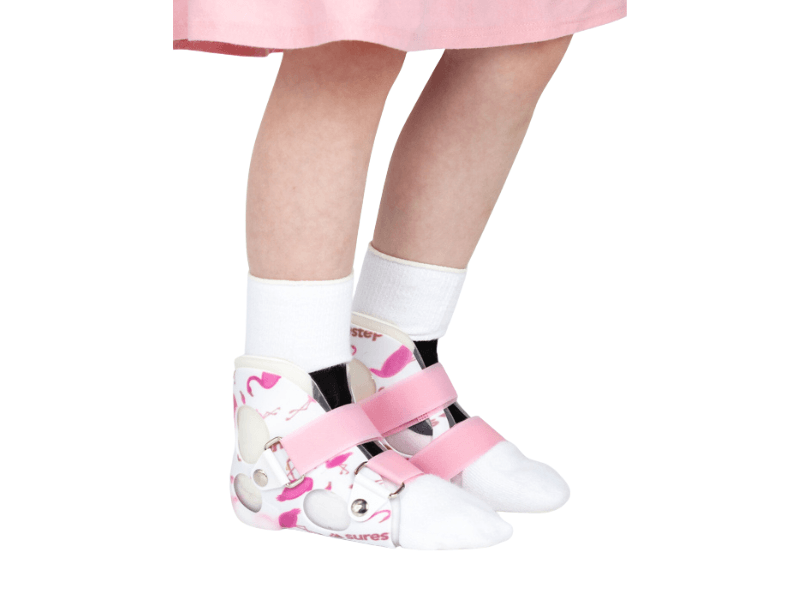
Every child is different. Following a detailed assessment, our clinicians may recommend specialised orthotic devices to improve stability, control, alignment, and movement patterns.
Our paediatric orthotic solutions may include:
Surestep SMO
Toe Walking SMO
Open Heel SMO
Big Shot SMO
Max Control SMO
2-Stage AFO Solid
2-Stage AFO PLS
2-Stage AFO Articulated
Night Stretching Strap AFO
DASS AFO
These devices may be suitable for children experiencing:
flat feet and excessive pronation
toe walking
poor balance and coordination
developmental delay
low muscle tone / hypotonia
high muscle tone / hypertonia
joint hypermobility
lower limb weakness
poor proprioception
gait abnormalities
limited ankle movement
muscle tightness and contractures
instability during walking and standing
A paediatric orthotics Hamilton assessment helps determine whether your child needs support, what level of support is required, and whether an SMO, AFO, splint, or other orthotic solution is appropriate.
Understanding Paediatric Orthotics, SMOs and AFOs
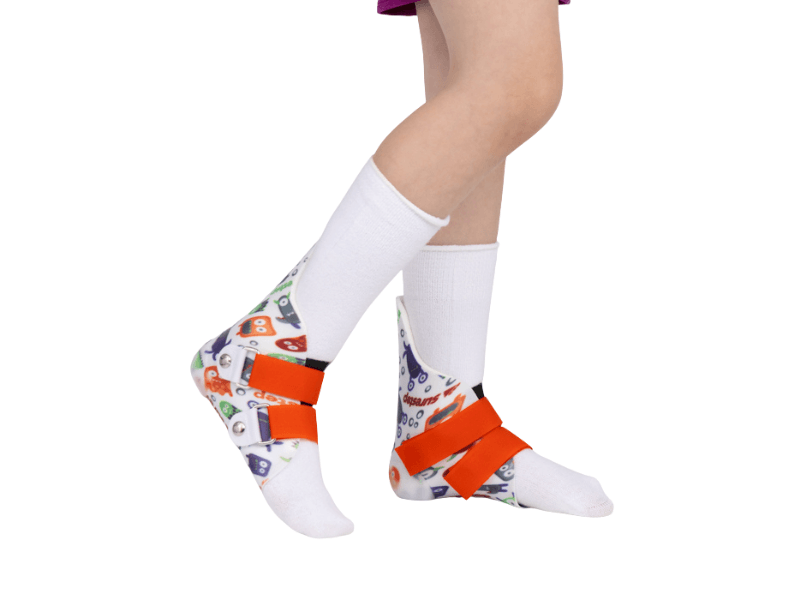
Paediatric orthotics and ankle-foot orthoses are designed to support growing children while allowing as much natural movement as possible.
Depending on your child’s presentation, an orthotic device may provide:
dynamic stability
functional support
alignment control
improved walking efficiency
better balance and coordination
improved standing endurance
support for muscle tone differences
assistance with safer movement and participation
The goal is not to over-brace a child. The goal is to select the least restrictive device that still provides the right support.
This is why paediatric orthotics Hamilton care starts with assessment first, not with choosing a product first.
How Support Levels Are Chosen
The Surestep product poster groups lower extremity orthoses by the amount of support or control they provide, including Dynamic Stability, Functional Support, and Alignment Control. Dynamic Stability allows flexibility and movement while providing stability; Functional Support provides support and stability while promoting functional movement; Alignment Control provides maximum support and positioning with less flexibility.
Dynamic Stability
This level may be used when a child needs stability but still benefits from flexibility, movement, and active correction with cues.
Functional Support
This level may be used when a child needs more support and stability while still promoting functional movement.
Alignment Control
This level is used when a child needs more significant positioning and control, particularly when the child cannot actively correct alignment when cued.
A paediatric orthotics Hamilton review helps decide which level of support best matches your child’s foot posture, muscle tone, gait pattern, and daily activity needs.
When Paediatric Orthotics May Be Recommended
Orthotics are not required for every child. Many children with flexible flat feet, mild walking variations, or normal developmental patterns may only need reassurance and monitoring.
Paediatric orthotics or bracing may be considered when there is:
pain or fatigue during walking, sport, or play
poor balance or frequent tripping
toe walking that is persistent or functionally limiting
significant pronation or foot collapse
low muscle tone or high muscle tone affecting movement
joint hypermobility with instability
limited ankle range of motion
poor proprioception or coordination
developmental delay affecting standing or walking
lower limb weakness or difficulty with transitions
A paediatric orthotics Hamilton assessment helps separate children who need active support from children who simply need monitoring.
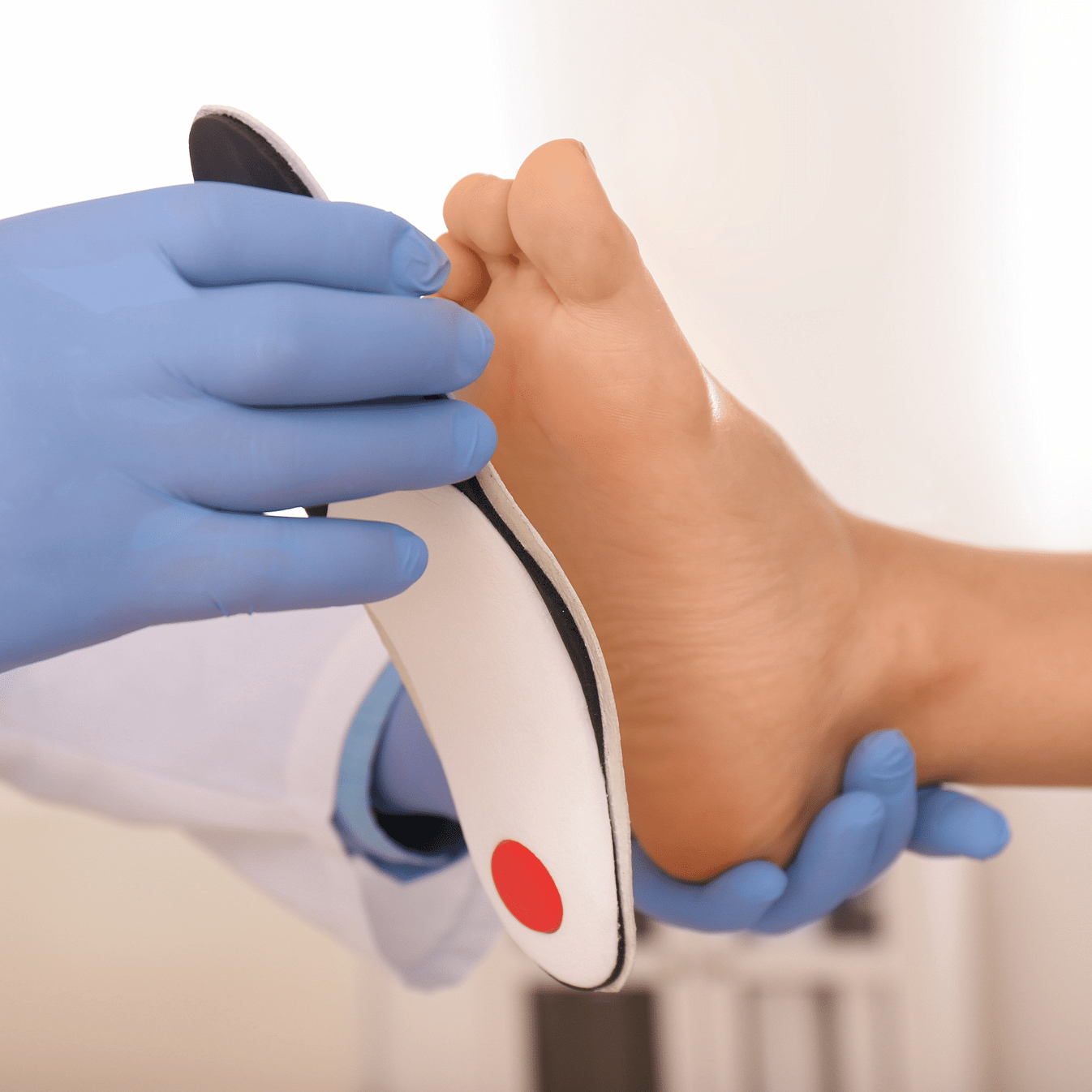
Product Guide – SMOs and AFOs We May Consider
Below is a practical parent-friendly guide to the devices listed in the Surestep product information you provided. These are not chosen based on name alone. They are selected based on your child’s assessment findings, gait pattern, tone, stability, range of motion, and functional goals.
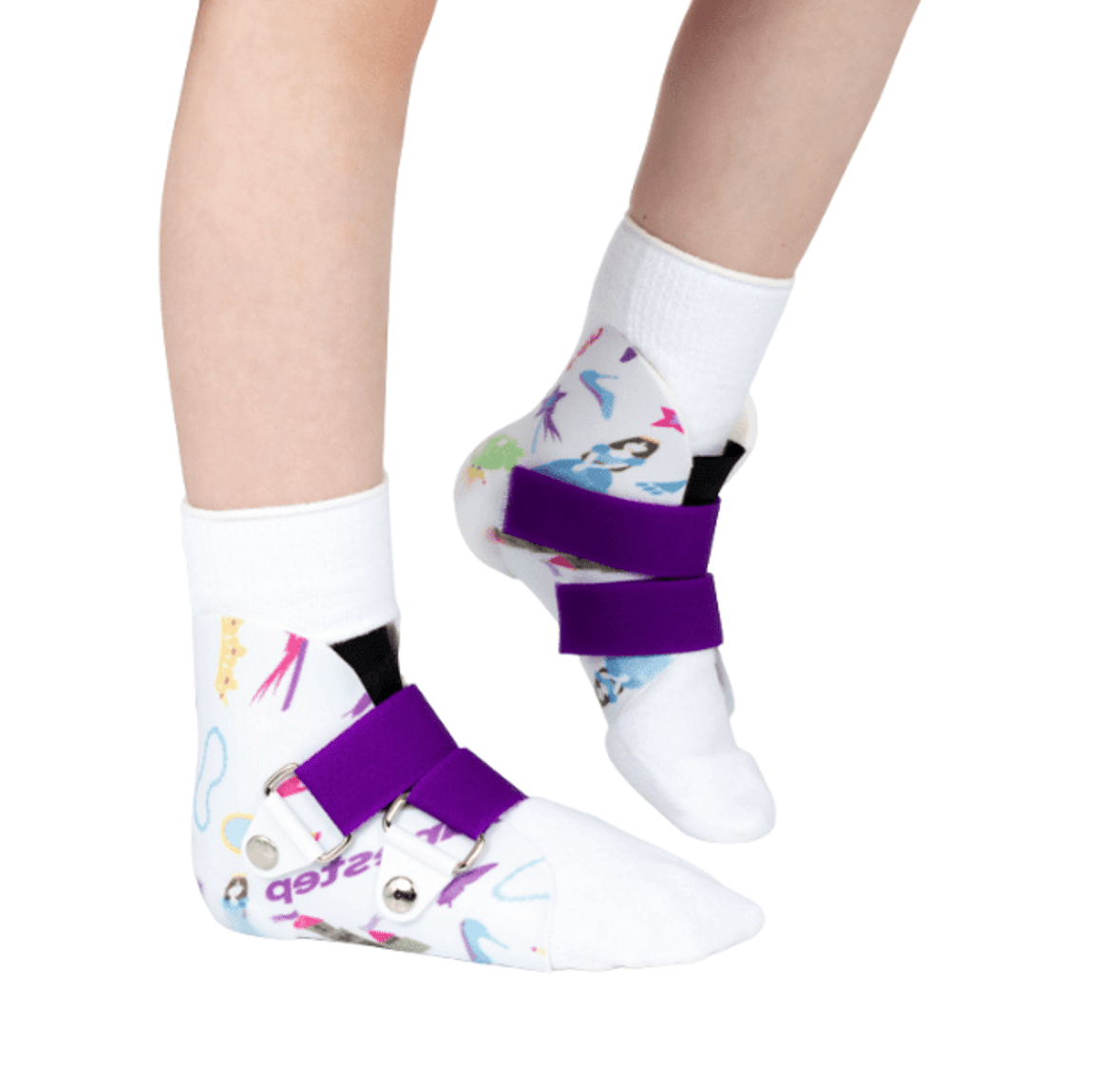
Surestep SMOThe Surestep SMO is a dynamic stability device. It may be considered for children with pronation, hypotonia, triplanar instability in weight bearing, inability to stand independently, mild toe walking, developmental delay, delayed gross motor skills, poor coordination, or balance concerns. The product poster lists a weight limit of 80 lbs and 1/16” Surestep plastic.
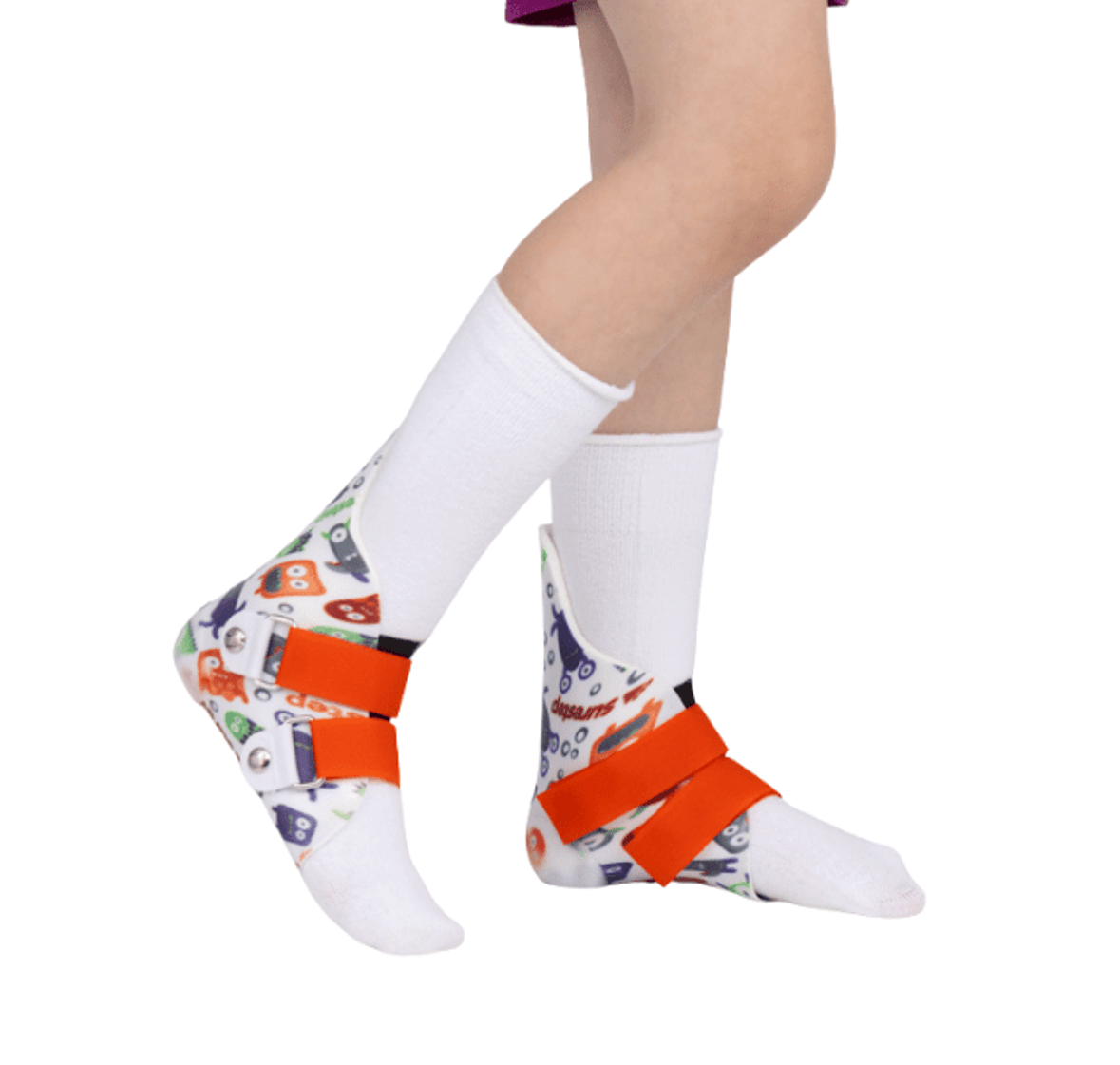
Toe Walking SMOThe Toe Walking SMO is a dynamic stability option that may be used for children with toe walking, pronation, hypotonia, or sensory deficits. The product poster lists a weight limit of 80 lbs and 1/16” Surestep plastic.
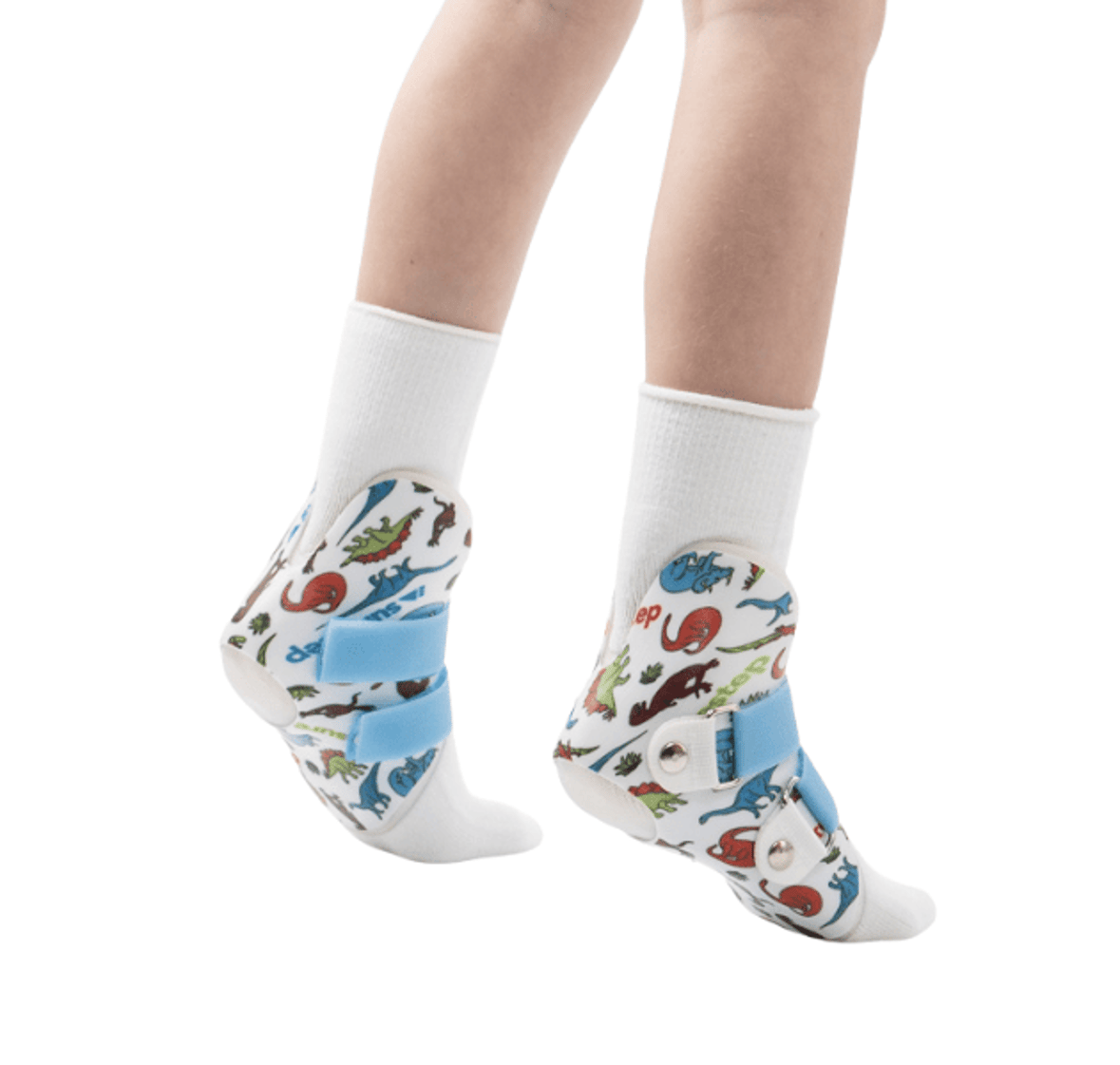
Open Heel SMOThe Open Heel SMO may be considered for pronation, hypotonia, triplanar instability in weight bearing, inability to stand independently, and mild toe walking. It is also listed as a dynamic stability device with an 80 lbs weight limit and 1/16” Surestep plastic.
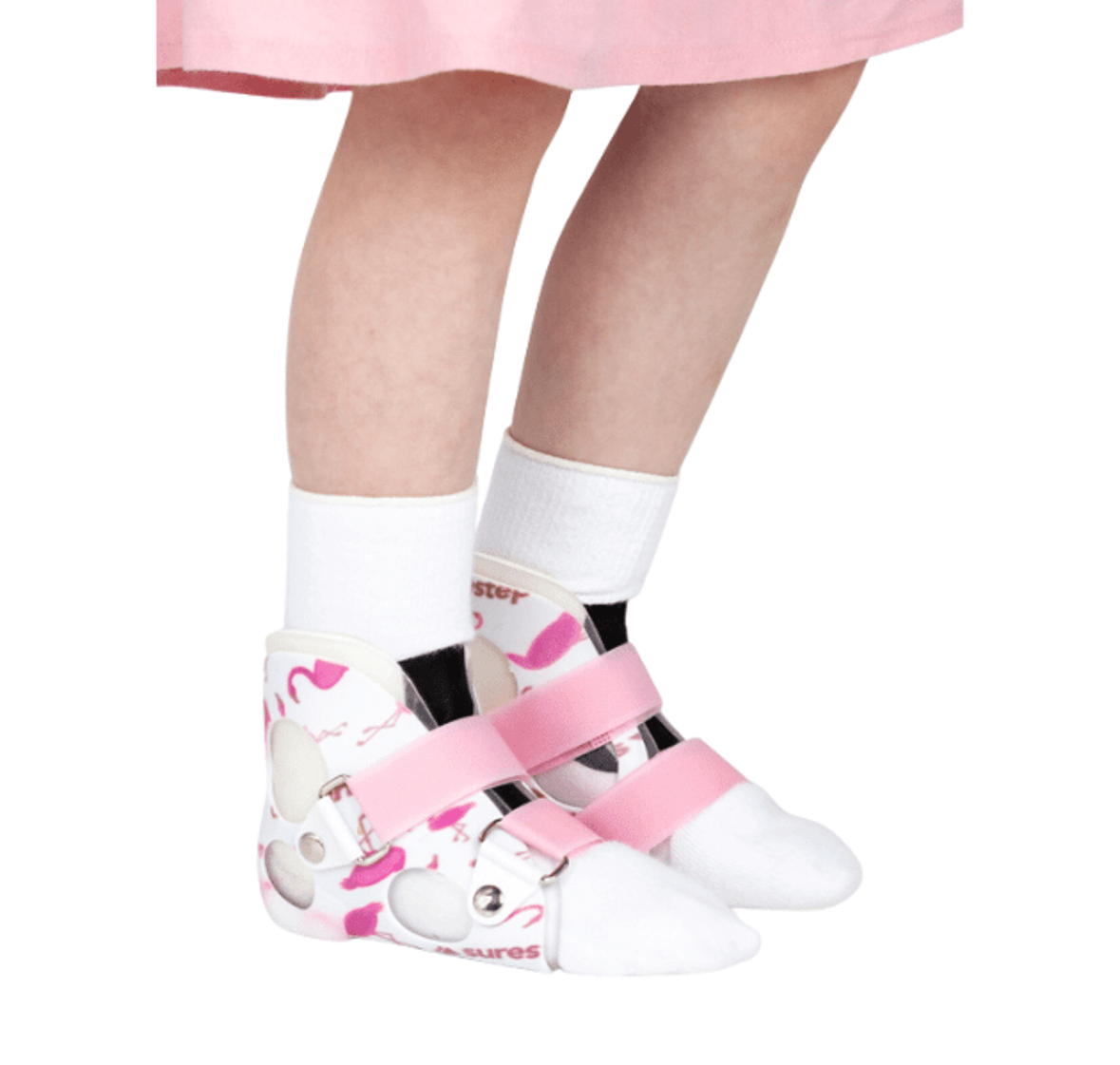
Big Shot SMOThe Big Shot SMO is designed for larger children requiring dynamic stability. It may be considered for pronation, hypotonia, triplanar instability in weight bearing, inability to stand independently, and mild toe walking. The poster notes Big Shot Lite is available for children 50–90 lbs, while Big Shot SMO is listed for children over 80 lbs with 1/8” Surestep plastic.
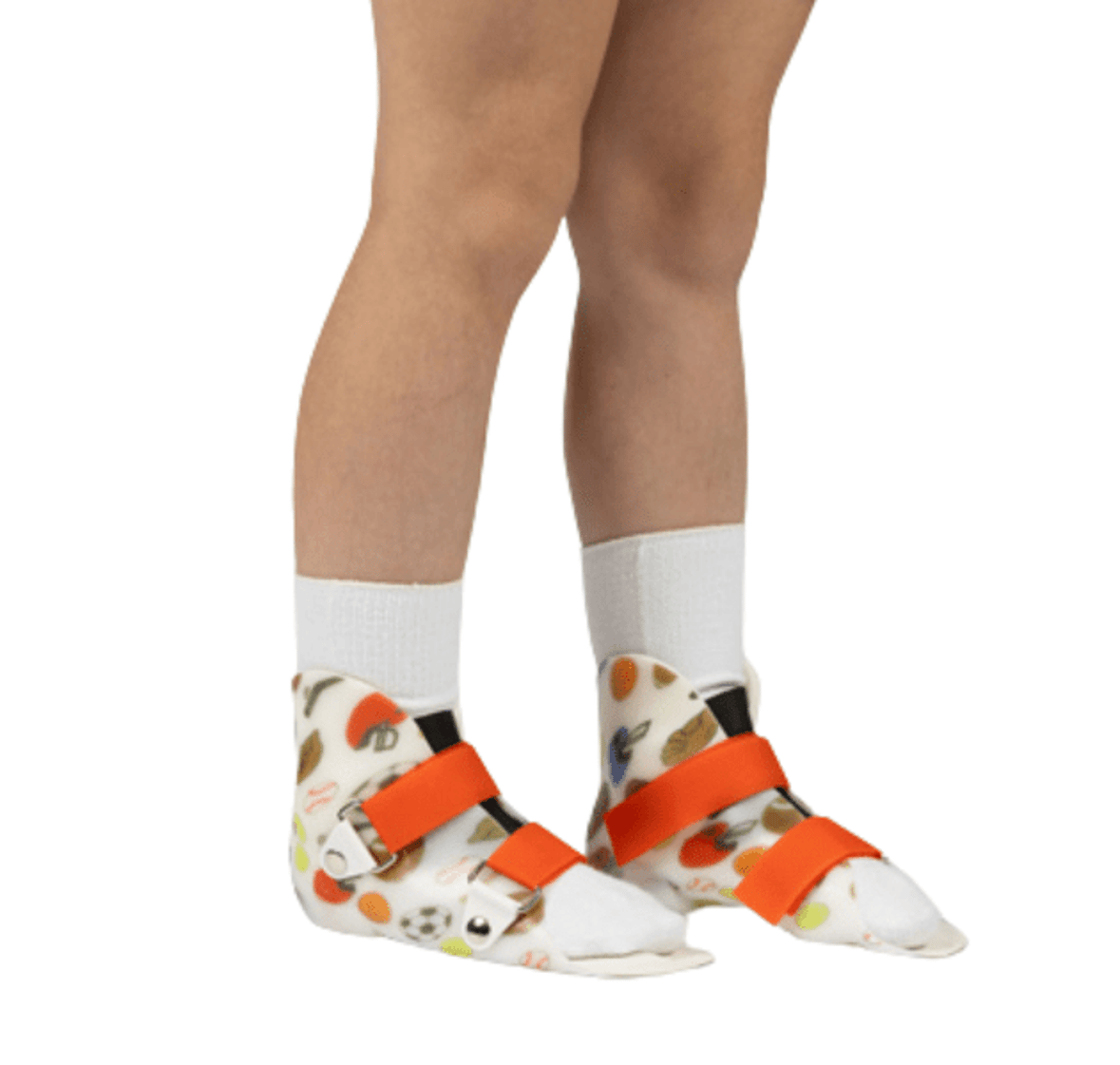
Max Control SMOThe Max Control SMO provides alignment control. It may be considered when there is a rigid hindfoot deformity, rigid midfoot deformity, or when forefoot posting is required. The poster lists 3/32” copolymer plastic.
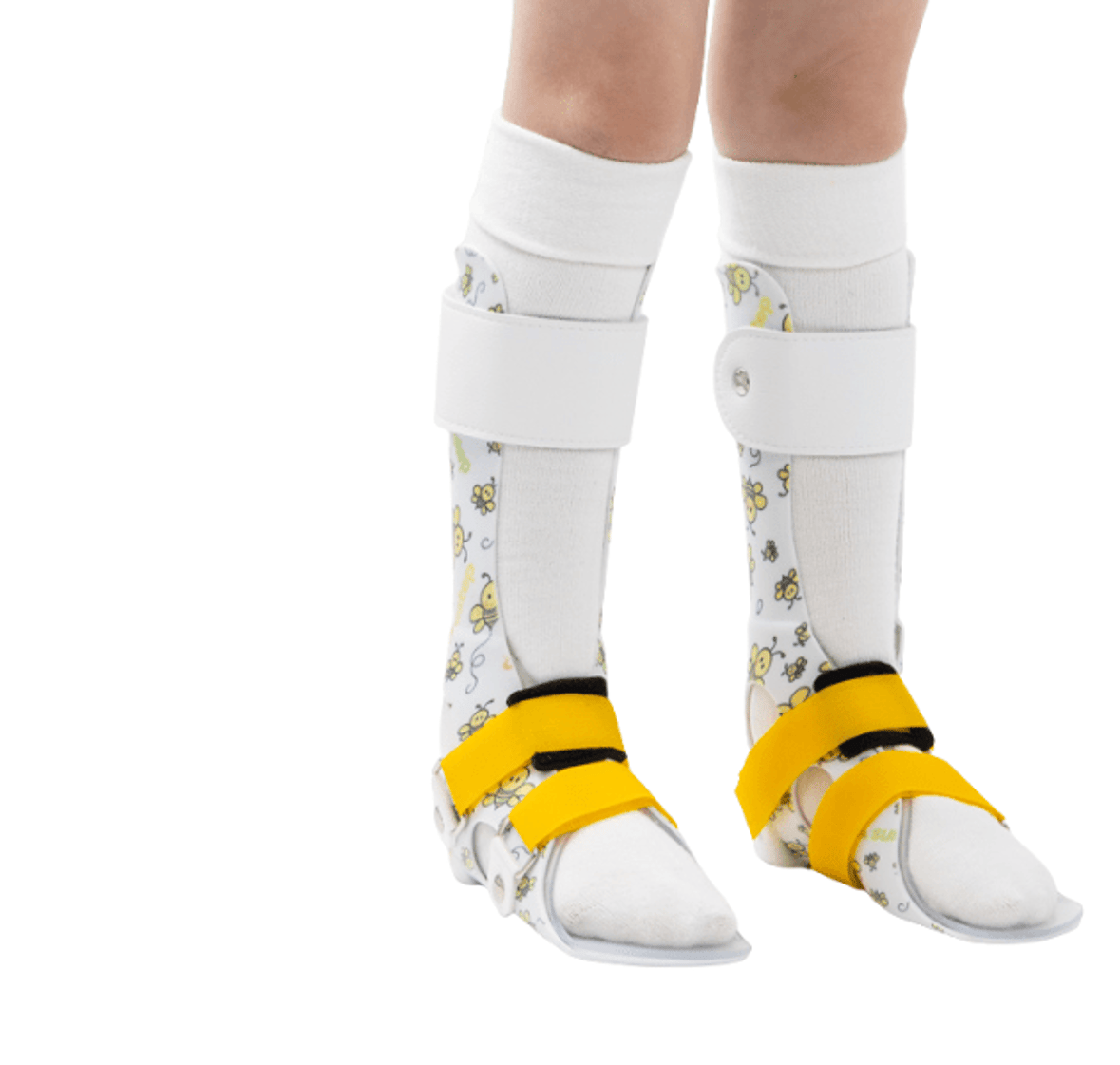
2-Stage AFO SolidThe 2-Stage AFO Solid is listed as a dynamic stability device. It may be considered for children with hypotonia, hypertonia, poor sagittal plane stability, moderate to severe midfoot or ankle coronal plane instability, poor proprioception, difficulty with transitions, limited range of motion, crouch gait, severe toe walking, increased spasticity, or when alignment/support of the lower extremities is required in a stander.
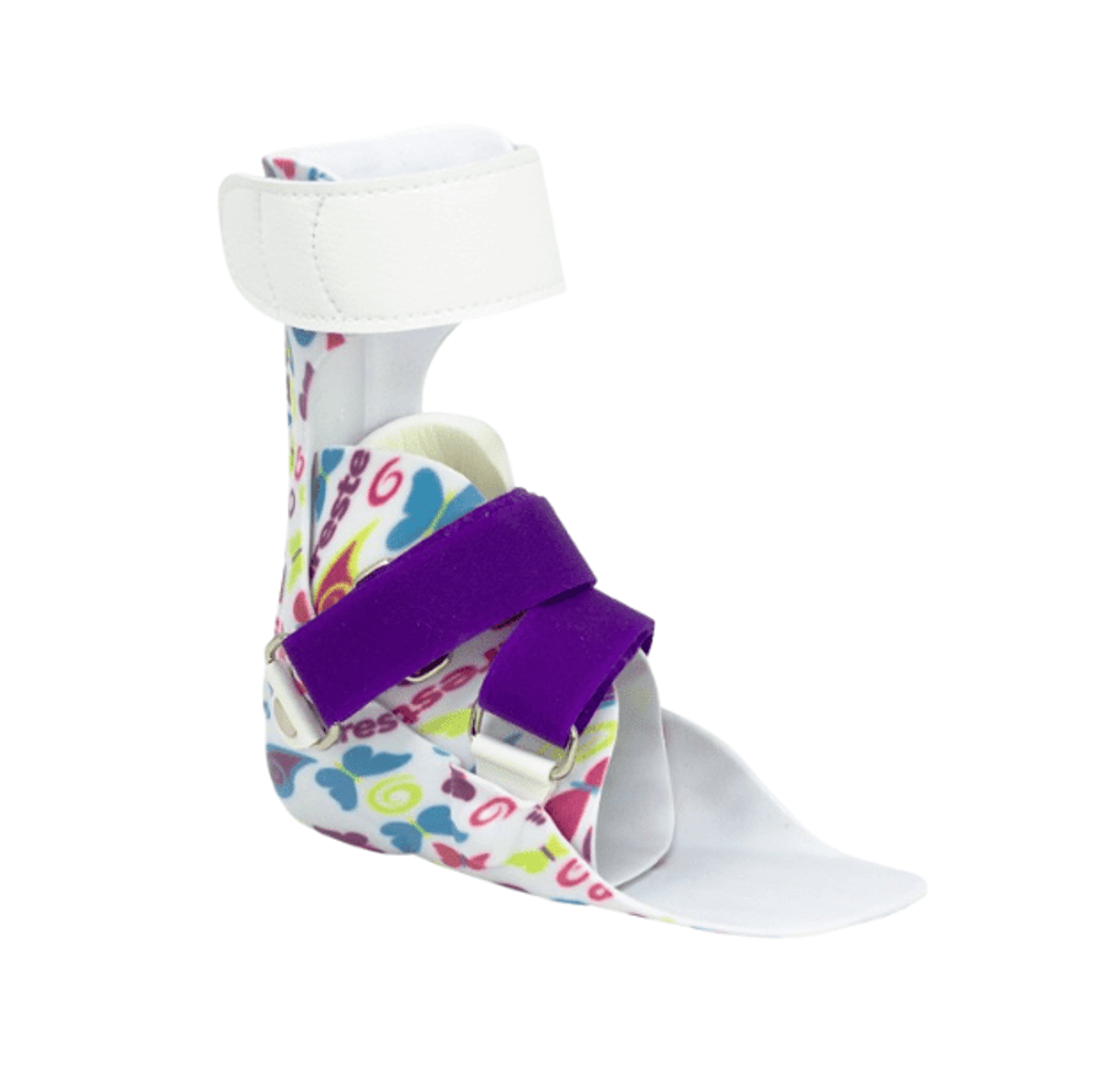
2-Stage AFO PLSThe 2-Stage AFO PLS is listed as a dynamic stability device. It may be considered for hypotonia, hypertonia, poor sagittal plane stability, moderate to severe midfoot or ankle coronal plane instability, poor proprioception, difficulty with transitions, moderate toe walking, poor lower limb rotation control, or when controlled dorsiflexion and plantarflexion may help.
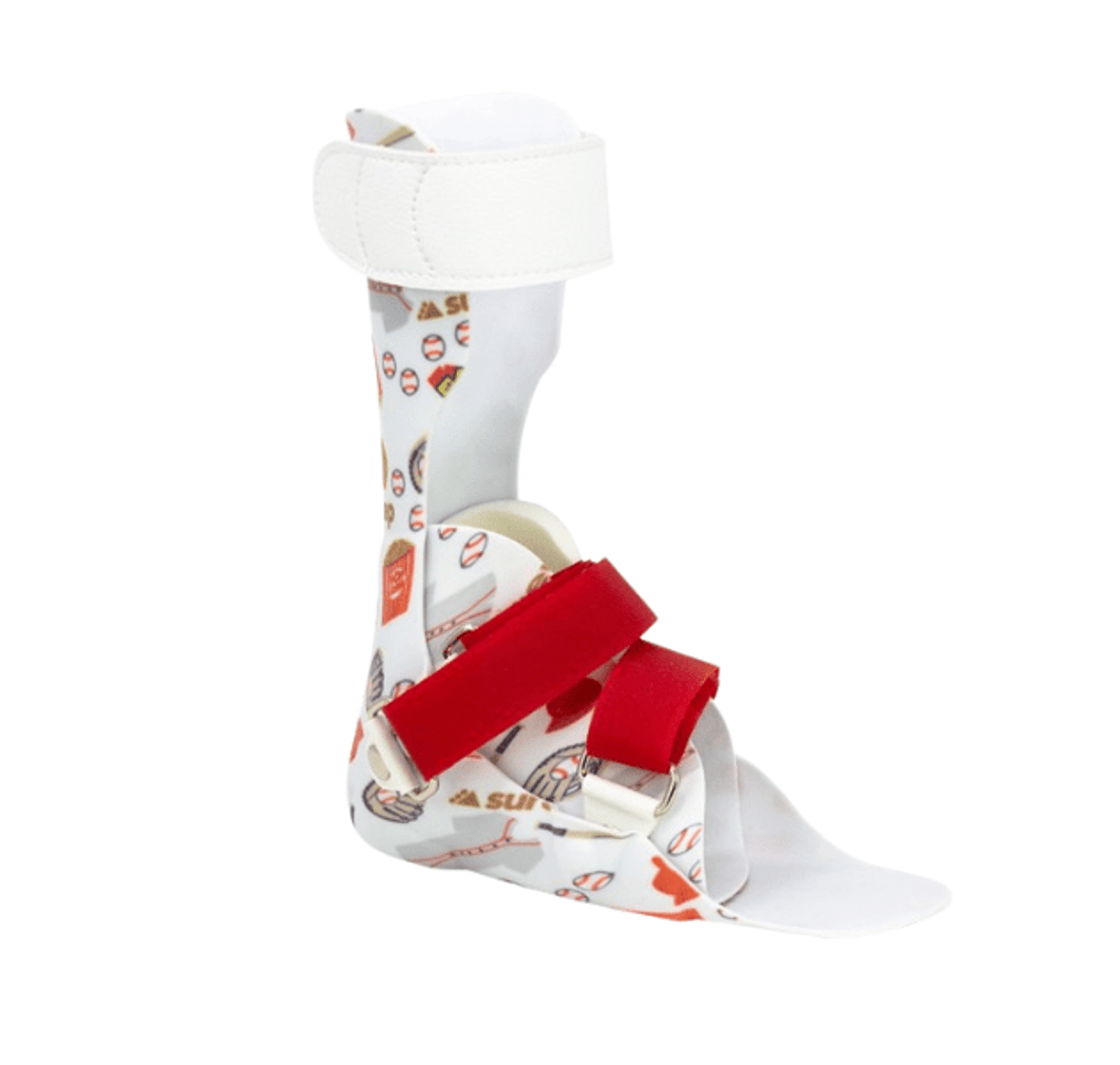
2-Stage AFO ArticulatedThe 2-Stage AFO Articulated is listed as a dynamic stability device. It may be considered for children with hypotonia, hypertonia, flexible pronation or supination, poor proprioceptive awareness, difficulty with transitional skills, and sagittal or frontal plane weakness.
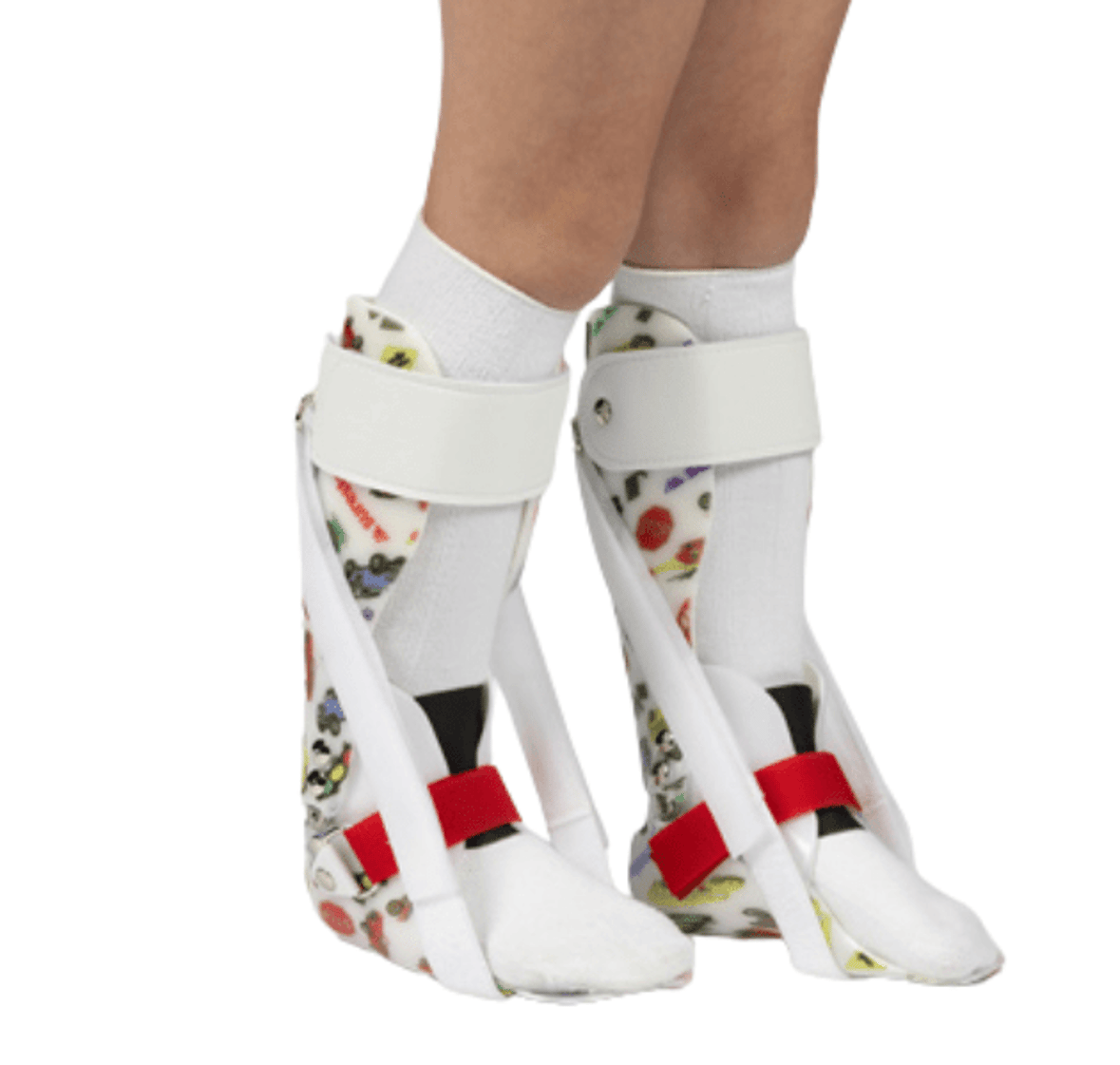
Night Stretching Strap AFOThe Night Stretching Strap AFO is listed as an alignment control device. It may be considered for ankle range of motion limitations, particularly when a lightweight device is beneficial. The poster lists 1/8” copolymer plastic and hook-and-loop straps as the stretching mechanism.
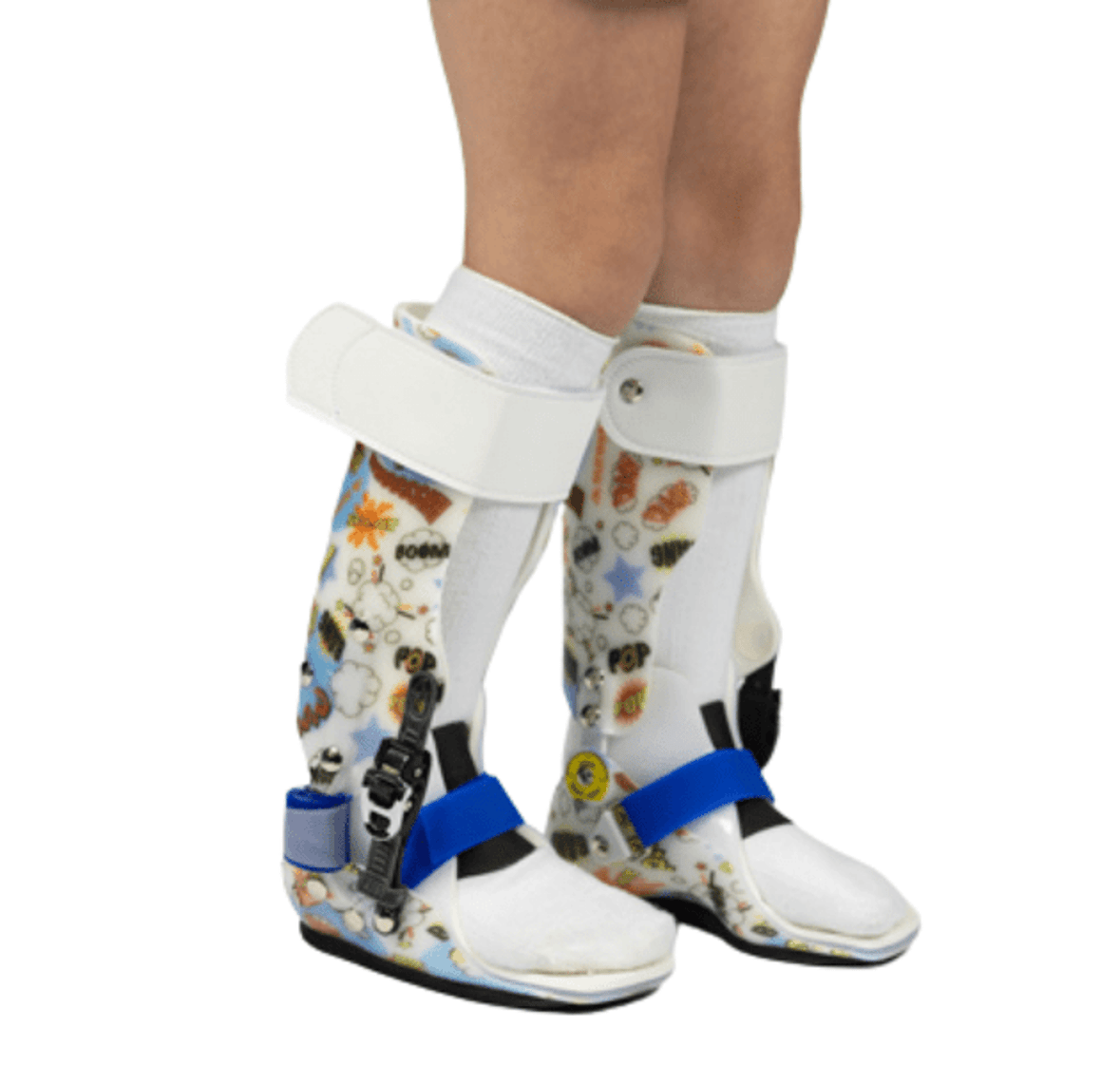
DASS AFOThe DASS AFO stands for Dynamic Adjustable Stretching Strap AFO. It is listed as an alignment control device and may be considered for ankle contractures, spastic involvement, and equinovarus deformity. The poster lists 3/32” copolymer plastic and a DASS component as the stretching mechanism.
A paediatric orthotics Hamilton appointment helps match the device to your child’s actual needs, rather than guessing based on symptoms alone.
Not sure whether your child needs an SMO, AFO, splint, or in-shoe orthotic?
How Foot Foundation Can Help
At Foot Foundation, our process is assessment-led, child-friendly, and practical. We do not recommend devices unless they are clinically appropriate.
We help families with:
understanding your child’s diagnosis or movement pattern
choosing the right level of orthotic support
checking whether an SMO, AFO, splint, or orthotic is suitable
fitting devices comfortably
explaining break-in schedules
reviewing footwear compatibility
monitoring skin comfort and pressure areas
adjusting plans as your child grows
coordinating with other providers when needed
A paediatric orthotics Hamilton assessment gives parents clear guidance on what is needed now, what can be monitored, and what may require follow-up later.
Want clear advice before choosing orthotics or braces?
You can also book a paediatric podiatrist in Hamilton for a full evaluation first.
Frequently Asked Questions
What conditions can paediatric orthotics help with?
Paediatric orthotics may help children with flat feet, toe walking, poor balance, developmental delays, lower limb weakness, hypermobility, low muscle tone, high muscle tone, and gait abnormalities.
Does every child with flat feet need orthotics?
No. Many children have flexible flat feet that develop naturally. Orthotics are only recommended when symptoms, functional difficulties, or biomechanical concerns are present.
What is an SMO?
An SMO, or supramalleolar orthosis, is a lightweight orthotic device that supports the foot and ankle while allowing controlled movement and improved stability.
What is an AFO?
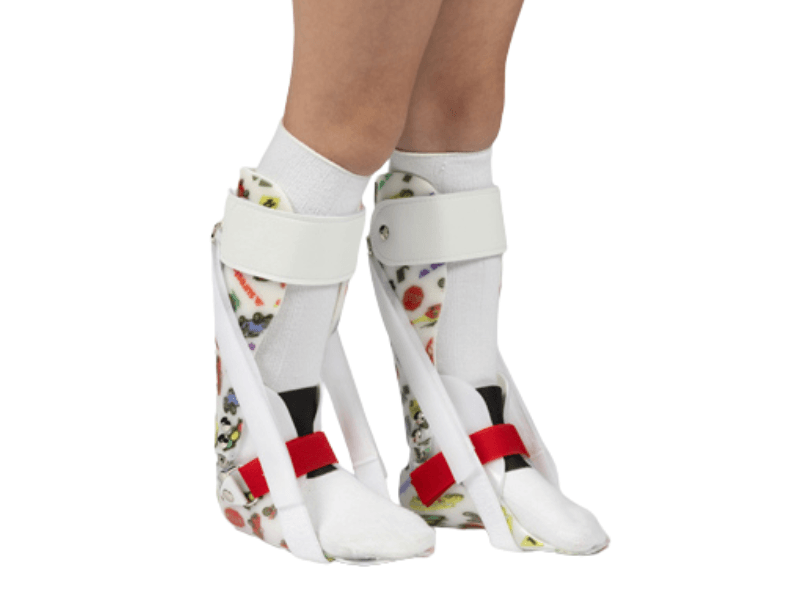
An AFO, or ankle-foot orthosis, is a brace that supports the foot and ankle to improve alignment, stability, and movement patterns during standing and walking.
What is the difference between an SMO and an AFO?
An SMO usually supports the foot and ankle around the ankle level, while an AFO extends higher up the lower leg and provides more control. The right choice depends on the child’s stability, tone, gait, and range of motion.
Can orthotics help with toe walking?
Yes. Certain devices, including Toe Walking SMOs, 2-Stage AFOs, and night stretching options, may be considered depending on the underlying cause and severity of the toe walking.
Will my child need to wear orthotics permanently?
Not necessarily. Many children use orthotics temporarily while developing strength, coordination, and movement skills. Some children with neurological or developmental needs may require longer-term support.
Are orthotics uncomfortable?
Orthotic devices are selected and fitted to maximise comfort, support, and function. Some children need a short adjustment period and a gradual break-in schedule.
Do orthotics replace exercises or rehabilitation?
No. Orthotics often work best alongside exercises, footwear advice, stretching, strengthening, and rehabilitation programmes that support long-term improvement.
When should I book an assessment?
You should consider an assessment if your child has foot pain, toe walking, balance concerns, frequent tripping, poor coordination, flat feet with symptoms, or difficulty participating in daily activities.

Book a Paediatric Orthotic Assessment in Hamilton
Children’s feet and movement patterns continue to develop throughout growth. Early assessment can provide clarity, reassurance, and access to treatment strategies that support healthy movement and long-term function.
Our paediatric podiatrists provide family-friendly assessments and personalised orthotic recommendations to help children move comfortably, confidently, and participate fully in everyday activities.
Appointments are available at Hamilton East and Hamilton Central.
Book a paediatric orthotics Hamilton assessment with Foot Foundation for evidence-based orthotic and bracing advice tailored to your child’s development, comfort, and movement goals.
Need local support? Book a paediatric podiatrist in Hamilton.