2-Stage Articulated AFO for Children in Hamilton
A Hinged Brace That Lets the Ankle Bend While Walking
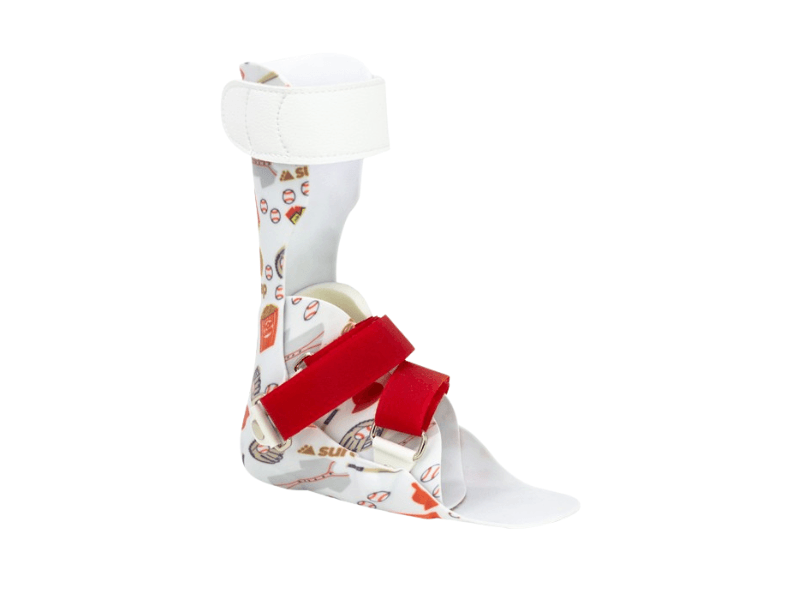
The 2-Stage Articulated AFO has a hinge at the ankle. That means the brace supports and aligns the foot and leg while still letting the ankle bend as your child walks, climbs stairs, squats and plays.
At Foot Foundation in Hamilton, we assess your child first and choose the option that supports them without taking away useful movement.
What Is an Articulated AFO?
Like all 2-Stage braces, it has two parts working together:
Stage one: a Surestep SMO that hugs the foot and controls how it rolls and twists.
Stage two: a taller shell up the lower leg, joined to the foot part by a hinge at the ankle.
Because the hinge lets the ankle bend, your child keeps using their own calf muscles while getting steady support underneath. It is often the option that feels most natural to walk in.
Which Children Might It Help?
A 2-Stage Articulated AFO may be considered for children who have:
low muscle tone (hypotonia) or high muscle tone (hypertonia)
flexible feet that roll in or out and correct with support
trouble sensing where their feet and legs are (proprioception)
difficulty moving between positions, such as standing up from the floor or climbing stairs
weakness at the ankle when stepping forward, or when the foot rolls in or out
It needs enough ankle movement to be worth hinging. If your child's ankle is very tight or stiff, a different option usually suits better.
Not sure which AFO suits your child?
Comparing the Three 2-Stage AFOs
The solid option gives the most controlled ankle movement and is often considered for severe toe walking, crouch gait and significant instability. The PLS option has a flexible back that allows some movement, and is often considered for moderate toe walking, foot drop and rotation control.
The articulated option is hinged, so it bends at the ankle. It’s often considered for children who need the ankle to bend while walking.
What to Expect
Assessment: we check walking, muscle tone, ankle movement, strength and function.
Plan: we explain why a hinged brace suits and what we expect it to change.
Casting or scanning: we capture your child's foot and leg shape, with careful attention to alignment.
Fitting: we check pressure points, strap comfort, shoe fit and walking in the brace.
Break-in: a gradual wearing plan, usually over two to three weeks.
Reviews: regular follow-up, including checks on the hinges.
Everyday Life With an Articulated AFO
Shoes: a roomier, deeper shoe, often one to one and a half sizes bigger with a wide opening. Removable insoles help.
Socks: a long, thin, seam-free sock pulled smooth under the brace.
Putting it on: sock first, then the brace, then the shoe.
Skin checks: check after every wear at first. Mild redness fading within 20–30 minutes is normal. Lasting marks or blisters need adjusting.
Hinges: keep them free of sand, grit and dirt, and tell us if they squeak, stiffen or feel loose.
Cleaning: wipe with a damp cloth and air dry away from heaters.
Is an Articulated AFO Right for My Child?
Other options may suit better if your child:
has a tight ankle that does not bend up well → 2-Stage AFO Solid
needs help lifting the foot when stepping → 2-Stage AFO PLS
mainly needs foot support, not ankle control → Surestep SMO
needs calf stretching during sleep → Night Stretching Strap AFO
See all options on our Paediatric Orthotics page.

Where We Fit AFOs in Hamilton
We see children at Hamilton East and Hamilton Central. Costs depend on your child's needs, and we explain everything before anything is ordered. See our price list or meet the team.
Have a question before booking?
You can also book a paediatric podiatrist in Hamilton for a full evaluation first.
Frequently Asked Questions
What does articulated mean?
It means the brace has a hinge at the ankle, so the foot part and the leg part can move in relation to each other.
Is a hinged brace less supportive?
It gives less ankle control than a solid AFO, and that is the point. It suits children who need support but also need ankle movement.
Will my child find it easier to walk in?
Many children do, because they can still bend the ankle for stairs, squatting and getting up off the floor.
Do the hinges need maintenance?
They need to be kept clean and checked at reviews. Let us know if they stiffen, loosen or make noise.
Can a child move from a solid AFO to an articulated one?
Sometimes. As ankle movement and strength improve, we reassess whether a hinged option would now work.

Book an AFO Assessment in Hamilton
If your child needs ankle support but also needs to bend, climb and squat, a hinged AFO may be the right fit. An assessment will tell you.
Need local support? Book a paediatric podiatrist in Hamilton.